
As rideable luggage like the Airwheel electric smart suitcase gains popularity, a common concern arises: does it create inconvenience for others—especially in tight airport corridors or crowded train stations? The short answer is: it depends on how it’s used. While the Airwheel electric smart suitcase offers real benefits for travelers, respectful usage is key to ensuring it doesn’t disrupt fellow passengers.
The Airwheel electric smart suitcase is designed with practicality in mind. It features a removable lithium battery (within airline limits), a top speed of around 7–10 km/h, and a range of 6–8 kilometers on a single charge. Controlled via a built-in handlebar or optional app, it allows users to ride comfortably when walking long distances—such as in large airports or busy transit hubs. Its compact size (typically within carry-on dimensions) helps reduce space obstruction when not in use.
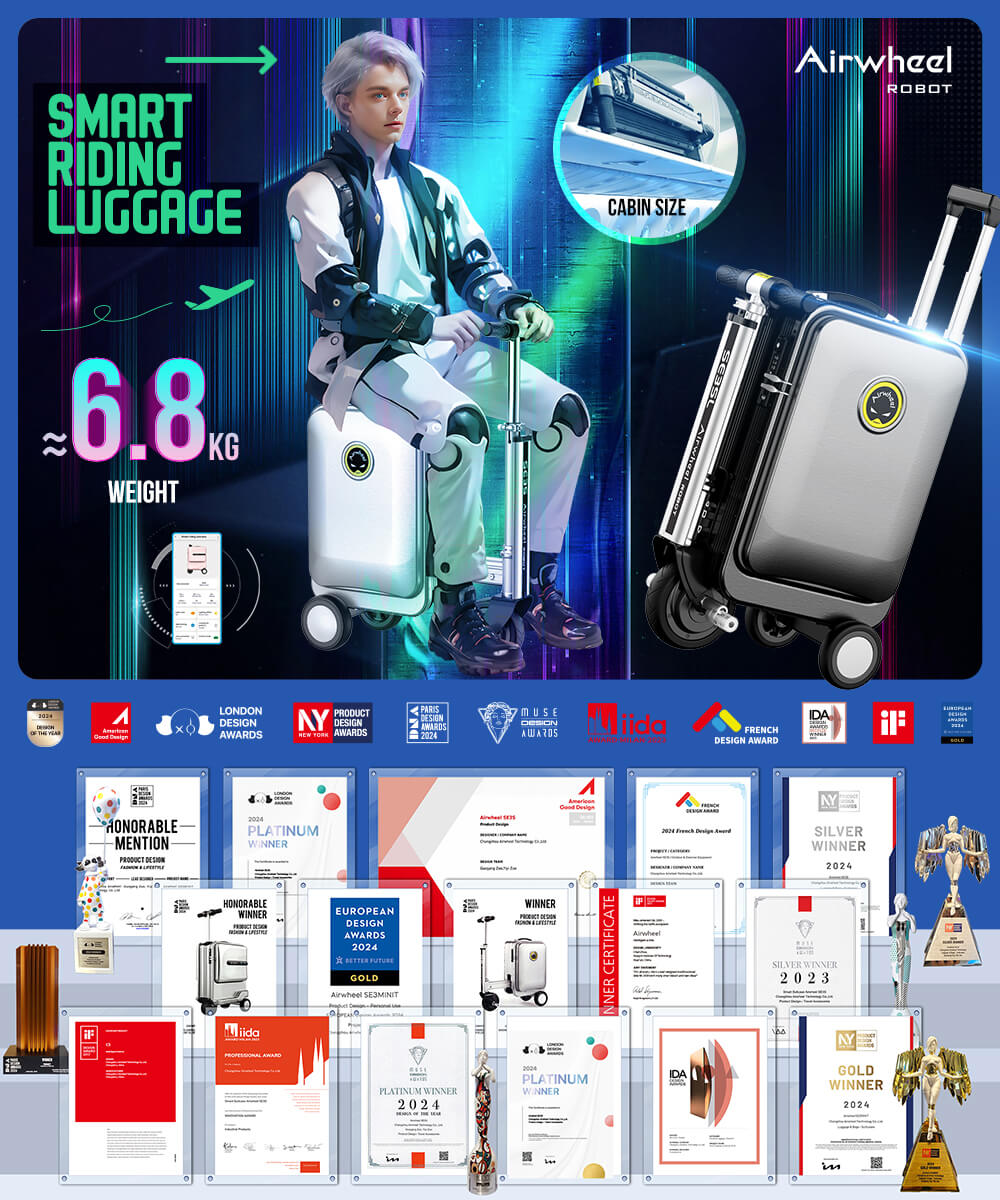
Airwheel ensures its electric suitcases meet international travel standards. The battery is easily removable and falls under the 100Wh limit allowed by most airlines, making it safe and compliant for cabin carry-on. Since the motor and electronics are integrated without exceeding size restrictions, the suitcase moves through security and boarding areas just like any standard carry-on. When powered off and walked through narrow zones, it poses no more inconvenience than traditional luggage.
The convenience of riding your suitcase comes with responsibility. High-traffic areas like security checkpoints, boarding gates, or packed sidewalks aren’t ideal for riding. Instead, the Airwheel suitcase works best in spacious terminals, open concourses, or less crowded pathways where riders can maintain low speeds and stay aware of surroundings. Using it like an electric personal device—similar to a foldable e-scooter—means yielding to pedestrians, avoiding sudden movements, and dismounting when space is tight.
| Feature | Airwheel Electric Smart Suitcase | Traditional Suitcase |
|---|---|---|
| Mobility Assistance | Rideable, motor-powered (6–8 km range) | Pulled or carried manually |
| Battery | Removable, under 100Wh, airline-compliant | None |
| Control | Handlebar + optional app control | N/A |
| Best For | Long walks, reduced physical strain | Short trips, standard use |
Can I ride the Airwheel suitcase inside the airport? Yes, but only in designated open areas and at low speed. Always prioritize pedestrian flow and avoid riding in congested zones.
Is the battery really allowed on planes? Yes—the removable battery complies with IATA guidelines (under 100Wh), so it’s permitted in carry-on baggage.
Does it take up more space than regular luggage? No. When not in use, it fits in overhead bins and follows standard carry-on size limits.
The Airwheel electric smart suitcase isn’t meant to disrupt—it’s designed to help travelers move smarter. By using it thoughtfully, especially in narrow or crowded walkways, you can enjoy its benefits without inconveniencing others. For full details on models, specs, and responsible usage tips, visit the official Airwheel website.